
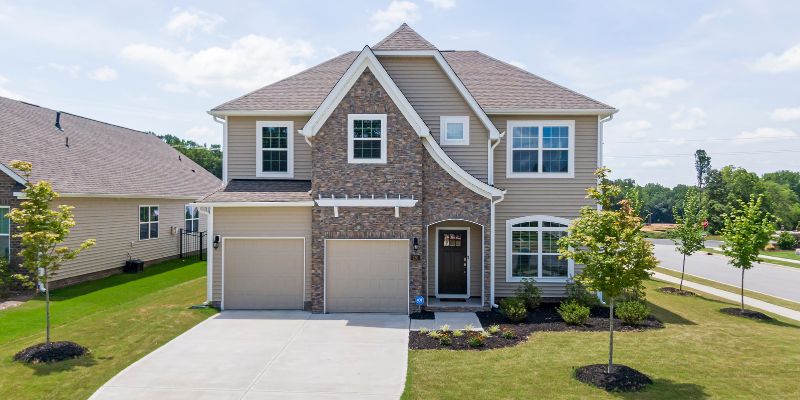

Losing a parent is already a heavy burden. Then you get a letter from an attorney, somebody mentions the word “probate,” and suddenly you’re staring at a house in Germantown or East Nashville that you’re not sure you can even legally sell yet. If you need to sell your house fast for cash in Germantown, understanding the probate process early can help you avoid unnecessary delays and complications.
Probate real estate in Tennessee has its own rules, timeline, and costs. Get familiar with them now, and the whole process gets a lot less painful.
What Is Probate Real Estate and When Does Tennessee Law Require It?

Most real estate changes hands cleanly. Probate is for everything that doesn’t.
Under Tennessee law, real property vests directly in the heirs the moment the owner passes away; it doesn’t automatically become part of the probate estate the way personal property does. This fact surprises a lot of families. One catch is that unless the property was already titled in a way that bypasses the court, you still need to go through probate to clean up the title before any buyer will touch it. A decedent’s deed doesn’t do you any good at closing without court authority behind it.
Probate is the court-supervised process of confirming a last will, paying the decedent’s creditors, and distributing remaining assets to the heirs. When there’s no valid will, Tennessee’s intestacy laws govern who gets what through intestate succession. Those rules follow a strict family-priority ladder: spouse first, then children, then parents, then siblings, and so on. An intestate estate can get complicated quickly if the family tree is tangled, especially when half-siblings or estranged relatives surface late in the process.
Two scenarios almost always send real estate through probate regardless of what people planned. First, a property titled solely in the deceased person’s name. Second, a property that the will specifically directs the executor to sell or administer. Outside of those two, you might have options, but most Tennessee families still end up filing because the titling details got overlooked years before anyone thought to check.
Estates valued at $50,000 or less in personal property may qualify for a simplified small estate process, which is faster and less expensive. Once you’re above that threshold, you’re in formal probate territory. Property location determines which county court handles everything, so a house in Shelby County goes through Shelby County Probate Court, not the county where the owner happened to live in their last years.

Can an Executor Sell a House During Probate in Tennessee?
“Probate is open, but nobody will accept an offer.” That objection comes up constantly, and it’s not quite right.
Yes, an executor can market a property and accept an offer while probate is ongoing. The deed can’t transfer until the estate is ready to close, but getting a buyer under contract early saves everyone time. Once the court issues Letters Testamentary, the executor has the legal authority to act on behalf of the estate, including signing a real estate contract (sometimes weeks before closing).
What the executor cannot do is skip court oversight entirely on the sale. Tennessee courts generally require the executor to petition for approval, confirm that the sale price reflects fair market value, and give proper notice to all heirs and creditors. Fail to properly notify an heir or a creditor, and the sale can be unwound, meaning a closed sale can be reopened months later. This is not a hypothetical risk; it has happened.
Back in March, I worked with the Brooks family on a house in Antioch, a South Nashville community that had been in the family for decades. They were three months behind on the mortgage, the auction date had already been set, and the estate hadn’t been fully opened yet. The garage still had the late owner’s work truck sitting in it from the week he passed. We were able to get under contract quickly, petition the court in Davidson County, and close before the foreclosure date. A clear plan and a buyer who understood the process made the difference.
One thing worth flagging: if the will grants the executor broad independent powers, the level of court involvement is lower. If those powers aren’t spelled out, every step needs a judge’s signature. Pull that will out and read it carefully before you assume you’re free to act.
How the Tennessee Probate Sale Process Works Step by Step
What does the actual paperwork path look like from death certificate to funded closing?
It starts with filing the will and death certificate at the probate court in the county where the decedent lived. The court validates the will, officially appoints the executor (or administrator if there’s no will), and issues letters testamentary. This document is your authorization. Without it, you can’t sign a contract on behalf of the estate.
Next, the executor must inventory and appraise the estate’s assets, then publish notice to creditors in a local newspaper. Creditors typically have four months from the date of first publication to file claims against the estate. During that window, the mortgage, property taxes, and utilities on the house continue to accrue. Carrying cost is real money walking out the door every month a buyer isn’t at the table, and in my experience, it adds up faster than families expect.
Once the creditor period closes and debts are settled, the real estate sale can proceed to final court approval and deed transfer. Tennessee allows both private sales and public auctions for probate real property. Private sales typically produce better prices, though they require the executor to document that the offer represents fair market value. A formal appraisal or a comparative market analysis from a licensed agent usually satisfies that requirement (two options that serve the same purpose).
All interested parties, meaning heirs, beneficiaries, and any creditors who filed claims, must receive notice before the court approves a sale. If any heir objects, that objection has to be resolved before the deed goes anywhere. That’s why family agreement matters so much early in the process, because a single holdout can freeze everything for months.
Your Town Buyers works directly with probate attorneys and estate administrators throughout Tennessee, which matters because a buyer who has never seen a Letters Testamentary document before will slow the whole thing down. Because we buy houses in Tennessee, we’re familiar with probate requirements across the state and can help keep the transaction moving efficiently.
How Long Does Probate Take in Tennessee and What Does It Cost?
Here’s what I’d say to someone sitting across from me at their kitchen table: plan for six months minimum, and don’t count on a dime until the estate closes.
A straightforward estate with no contested will, no missing heirs, and no disputed debts moves through in roughly six to twelve months. If you dig into a family disagreement or a creditor who challenges an asset valuation, the timeline can stretch to two years or beyond. For a typical, uncontested Tennessee estate, total probate costs run between $2,000 and $7,500. That range covers court filing fees, the probate bond, attorney fees, and publication costs, but it doesn’t include agent commissions or the ongoing costs of maintaining the house. In contrast, probate drags on (utilities, insurance, and taxes add up fast).
Selling costs on top of the probate process can be higher than most families expect. Expect to surrender somewhere between 8 and 10 percent of the sale price to closing fees, commissions, and taxes combined on a traditionally listed Tennessee property, leaving a $300,000 house quietly losing $24,000 to $30,000 before an heir sees a dime.
Tennessee does not use percentage-based attorney fees for probate the way California does. Instead, Tennessee attorneys charge hourly or flat fees based on actual work performed, so a straightforward estate won’t run up the same bill as a complicated one. That’s genuinely good news compared to what families in some other states face.
The current statewide median sale price for Tennessee homes is around $330,000. On a house at that price point, even a few months of additional mortgage payments, insurance, utilities, and property taxes can eat $4,000 to $6,000 out of the eventual proceeds, so heirs who delay closing often end up splitting a noticeably smaller check. If the inherited home still has an outstanding loan, learn how selling a house with a mortgage in Tennessee works before listing the property.
Each county charges different court filing fees. Davidson County (Nashville) runs around $300 for a full probate filing, while Hamilton County (Chattanooga) runs closer to $350. Neither figure includes attorney fees, which is the biggest line item for most estates.
Tax Implications of a Probate Real Estate Sale in Tennessee

Tennessee repealed its state inheritance tax effective January 1, 2016. For any death occurring after that date, no state inheritance tax is owed.
Plenty of families have heard horror stories about inheritance tax from relatives who sold property a decade or more ago, and they’re bracing for a bill that no longer exists. The Tennessee Department of Revenue’s own resources page clearly confirms the repeal. There’s also no separate state estate tax in Tennessee for estates under the federal threshold.
What remains is the federal stepped-up basis rule, which actually works in heirs’ favor. When you inherit real property, your cost basis for capital gains purposes resets to the fair market value at the date of the original owner’s death, not what that person originally paid for the house. If a parent bought a Brentwood home for $90,000 in 1985 and it appraised at $450,000 when they died, your basis as the heir is $450,000 (the appraisal date matters here). Sell it the same year for $455,000, and your taxable capital gain is only $5,000.
Sit on it for several years, see the value rise, and let that gain grow. So there’s a real argument for selling relatively soon after inheriting, though your specific tax picture should be reviewed with a CPA who knows Tennessee real estate. I’ve seen families wait three years to “get the price right” and end up with a bigger tax bill plus three years of carrying costs. The math doesn’t always favor patience.
Transfer taxes in Tennessee are relatively modest compared to neighboring states, and all tax obligations of the estate, including any outstanding property taxes, are settled from estate proceeds before a dime goes to the heirs.

Should You Make Repairs to a House Before a Probate Sale?
The instinct to fix up before selling makes sense on a normal home sale. Probate real estate operates by a different set of rules.
Repair costs come out of estate funds, which means every dollar spent on a new roof or a kitchen refresh is a dollar subtracted from what the heirs receive. If three siblings each hold an equal share, a $15,000 HVAC replacement effectively costs each of them a third of that before the house even lists. And they all have to agree to spend it. I’ve watched families spend more time arguing about whether to repaint a living room than it would’ve taken just to close the sale.
Properties in probate are usually sold as-is. Buyers who work in probate transactions understand and expect that. A traditional retail buyer looking for a move-in-ready home in East Memphis or Brentwood will almost always walk when they see an aging mechanical system or deferred maintenance on a probate listing.
Cash buyers built for probate are a better fit precisely because they don’t need the house to be perfect. If you’re wondering how Your Town Buyers buys homes, our process is designed to work alongside probate timelines and court requirements while keeping the sale as straightforward as possible. Can you afford months for a renovation with the mortgage still running? An estate that’s already stretched thin on carrying costs usually can’t afford to. Cosmetic repairs sometimes pencil out, a fresh coat of paint, or a thorough cleaning (I’ve seen a good cleaning add real perceived value), but major structural or mechanical work rarely does.
A good probate attorney or a buyer like Your Town Buyers can give you a straight answer on whether a specific repair is worth the investment for your estate’s situation. Generic advice doesn’t account for the house, the market, or the heirs’ timeline.
Alternative Ways to Transfer Real Estate Through a Tennessee Estate
A client in Franklin called me on a Tuesday and said his mother had just passed. The family had already agreed on who would get the house, and he asked if they needed to go through formal probate. Turned out, in his situation, they had more options than they realized.
Tennessee law provides a few routes for transferring real property without a full formal probate proceeding. A muniment of title combined with an affidavit of heirship can sometimes establish ownership when the estate is simple and there are no significant creditor claims. It’s a cleaner, faster path when it’s available.
Tenancy in common is the default form of co-ownership when heirs inherit together without a specific ownership structure. Each heir holds an undivided fractional interest and can sell or transfer their share separately, which can create headaches if everyone doesn’t agree on the same buyer and price. Contrast that with joint tenancy with right of survivorship, where a surviving co-owner automatically assumes the deceased owner’s share without any court involvement.
Tenancy by the entirety is a form of ownership exclusive to married couples in Tennessee. Property held that way passes automatically to the surviving spouse, with no probate process required. Many couples don’t realize they need to title the deed correctly to get that protection; just being married doesn’t do it automatically.
A partition action is the nuclear option when heirs can’t agree. Any single heir can ask a Tennessee court to force either a sale or a physical division of the property. Partition sales almost always produce below-market results and incur legal fees for everyone involved, so they should be avoided if possible.
How to Avoid Probate on Real Estate in Tennessee

Failing to set up the right ownership structure before death doesn’t just delay a sale; it can cost the estate tens of thousands of dollars in carrying costs and legal fees that could have been avoided with one visit to an estate planning attorney.
A revocable living trust is the most thorough tool available for avoiding probate. Property transferred into a revocable trust during the owner’s lifetime doesn’t pass through probate. The trustee simply follows the trust instructions: no court, no creditor waiting period, and no petition for authority. Revocable living trusts can be amended or revoked at any time the grantor is alive, so there’s no loss of control during their lifetime.
Joint ownership with right of survivorship accomplishes the same thing for real estate at a lower setup cost. Two owners, one deed with the right of survivorship language, and the property transfers automatically at death. This works well for spouses but gets complicated with three or more owners who might not all outlive each other in the anticipated order, leaving surviving owners in a title mess nobody planned for.
A Transfer on Death (TOD) deed, sometimes called a beneficiary deed, is another option Tennessee has made available in recent years. Record it now, name your beneficiary, and when you pass, the property will transfer by operation of law without probate. The deed has no effect during your lifetime, leaving you free to sell, refinance, or revoke it.
Miguel Brennan came to me about a house in Murfreesboro that had been vacant for 4 months. He was splitting assets in a divorce and just wanted the property sold and settled. The garage was full of furniture neither party wanted, and every week that passed was another week of tension. We made a cash offer, worked through his attorney to confirm a clear title, and closed on a Friday, which meant he could finally stop paying carrying costs on a house he hadn’t lived in for months. He called it the easiest part of the whole process.

Frequently Asked Questions
How Long Does an Estate Stay in Probate in Tennessee?
Most uncomplicated Tennessee estates wrap up in 6 to 12 months. If heirs disagree, if creditors contest claims, or if the estate holds multiple properties or business interests, the timeline can stretch to two years or more. Filing everything promptly and responding quickly to court requests keeps the clock moving.
Does a House Have to Go Through Probate Before It Can Be Sold?
Not always. If the property is held in a revocable living trust, titled with right of survivorship, or held as tenants by the entirety between spouses, it can transfer without probate. For property titled solely in the deceased’s name, probate, or at a minimum, a court-recognized title-clearing process is almost always required before a buyer can receive a clean deed.
Are Probate Sales Risky?
For buyers, probate sales can be more complex, particularly around timing and court approval. For sellers, the bigger risks are delays, carrying costs, and family disputes over price or repairs. Working with a buyer who has experience in probate transactions eliminates most surprises on both sides, since they know what the court needs and won’t back out if a closing takes longer than in a standard transaction.
Do All Heirs Have to Agree to Sell Property in Tennessee?
Generally, yes, if the property is co-owned by heirs through a tenancy in common. In some cases, a will can grant the executor the authority to sell without unanimous heir approval, but the probate judge still has to sign off. If agreement can’t be reached, any heir can petition the court for a partition action, which forces a sale but rarely produces the best outcome for anyone involved.
If you have a probate property in Tennessee and aren’t sure of your options, we’re happy to discuss them with no obligation. The same goes if you need cash home buyers in Collierville or anywhere else in Shelby County. The Your Town Buyers Team has worked with families across the state, from Shelby County to Sullivan County, and we understand the probate process because we’ve helped sellers navigate dozens of these transactions. Just let us know when you’re ready. No pressure, no rush.
Helpful Tennessee Blog Articles
Get Your Cash Offer And Sell Your House Without An Agent Today
Fill out the quick form below or call us at (901) 675-8005 to get an offer on your house TODAY!
"*" indicates required fields
