
How to Sell a House with Water in the Crawl Space in Tennessee

Selling a House That Has Water in the Crawl Space Tennessee

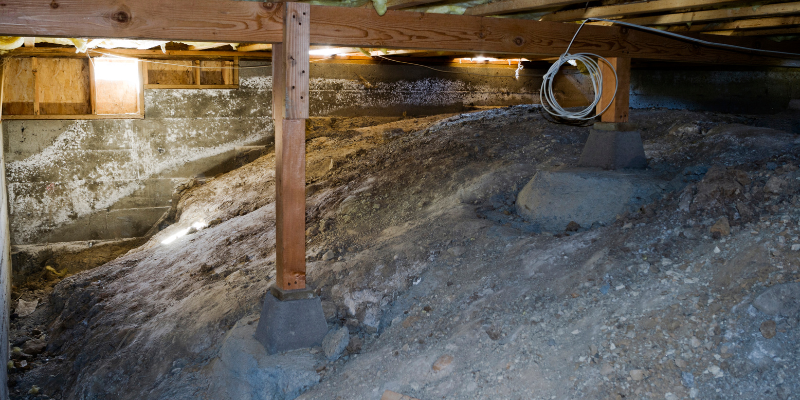
Standing water under a Tennessee house doesn’t announce itself. No stain on the ceiling, no drip under the sink, just a damp smell with no obvious source. Selling a house with water in the crawl space starts with knowing it’s there. The EPA notes that crawl spaces running high humidity are common sites of hidden mold growth, especially over a bare earth floor. Soil wicks moisture, and the warmth of the space evaporates it into the air. Tennessee sits in a humid subtropical zone. From spring through fall, the air under a house here routinely holds 60 to 90 percent relative humidity. So the problem grows quietly for years. Then a buyer’s inspector slides under there with a flashlight and finds it in ten minutes.

Can You Sell a House with Water in the Crawl Space in Tennessee?

Selling a House with a Waterlogged Crawl Space TennesseeLast year a woman called me from Arizona about her mother’s house in Collierville. Her mom had just moved into assisted living, and the sump pump had quit sometime over the winter. A chest freezer in the garage was still humming along, full of food nobody wanted.

Yes, you can sell that house. Water in a crawl space isn’t a legal barrier to transferring title in Tennessee, and it isn’t a reason to give the property away either.

You’ve got three realistic paths. Fix the problem and list on the open market at full value. List as-is with honest disclosure and let buyers price the risk. Or sell straight to a cash buyer who’s already built the repair into the offer. Each one trades money for time, and the right answer depends on which of those you have more of.

Timing matters. Tennessee had 64,377 homes on the market in August 2026, up 38 percent year over year, with about five months of supply. Buyers can be choosy right now. Redfin put the state’s median time on market at 66 days in August. A listed house with a known defect can sit well past that before anyone bites.

A wet crawl space doesn’t kill a sale. Surprise kills sales. The ones I’ve watched fall apart weren’t the houses with water underneath them. They were the houses where the seller swore the crawl space was dry and the inspection said otherwise. Credibility on every other line of the disclosure goes out the window with it.

Want to skip the repair cycle entirely? A local cash buyer like Your Town Buyers will make an offer on the house in its current condition, water and all.
How Do You Assess Water Problems in a Crawl Space?

A homeowner spots a puddle in the crawl space, calls a waterproofing company, and signs off on an interior drain with a new pump. The crew does solid work. Water comes right back the following spring, because the real source was a crushed downspout extension dumping roof runoff against the foundation for eleven years.

Diagnosis first. Always.

Figure out which of four things you’re dealing with, because the fix and the cost split sharply between them. Surface water from outside points to grading and gutter problems. Groundwater pushing up through the soil points to a high water table or a failed footing drain. Condensation on ductwork and joists points to humidity and ventilation. A steady drip in one spot usually means plumbing, and that one’s often the cheapest of the four.

Where you live in the state shifts the odds. East Tennessee sits largely on red clay weathered out of limestone, and clay holds water long after the surface looks dry. Middle Tennessee runs heavy clay too, slow to drain and quick to shove moisture toward a foundation wall. Out west, in the Memphis river bottoms, the water table sits close to the surface. Ground moisture there is a standing condition, not a storm event.

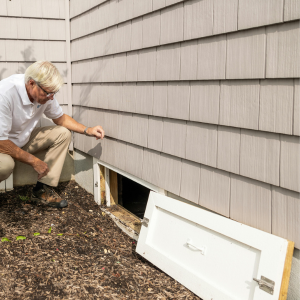
Bring in a licensed home inspector before a buyer does. I’d pay for a crawl space specific evaluation on top of a general inspection if the house has ever smelled musty upstairs. A good inspector measures moisture content in the joists and checks the vapor barrier for tears and pooling underneath. They’ll look at insulation for sagging or staining, and note any pests that have moved in. That pest note is where the real surprises show up. Wet wood draws termites and carpenter ants the way a porch light draws moths.

When did you last go under your own house? Most sellers I meet never have, and that’s not a character flaw. It’s just how crawl spaces work.

Photograph everything. Dates on the photos, water meter readings, receipts from any prior work. Pick up a humidity meter while you’re at it, $10 to $50 at any hardware store, and log what it reads down there. That folder is worth real money later, because it lets you prove the problem’s history instead of arguing about it. The EPA is blunt on timing: dry wet materials within 24 to 48 hours or mold starts. A puddle sitting since March is a different conversation than one from last Thursday’s storm.

How Does Water in the Crawl Space Affect Home Value?

For years I priced wet crawl spaces as a straight deduction equal to the repair estimate. That was wrong.

Buyers don’t subtract the contractor’s number. They subtract it, add a cushion for whatever might be hiding behind it, then add more for running a project in a house they haven’t moved into yet. A $7,000 problem lands at roughly double that once you start trading offers. That gap is the price of doubt. You close it with paperwork, not with arguing.

That squeeze hits buyers at the lender’s desk before they ever walk through your door. Tennessee’s median sale price landed at $378,325 in August 2026, up less than a percent from a year earlier, with the average 30-year fixed near 6.7 percent. A buyer stretching to make that payment has almost no cash left for foundation work after closing. Any repair they can’t roll into the loan knocks that buyer out of the running for your house.

An appraiser can flag crawl space conditions a lender won’t let slide. Standing water, rotted structural members, active mold, or damaged asbestos wrap on old pipes can draw a condition note. Some programs require repairs before funding. Your loan officer or the buyer’s lender can tell you exactly which conditions trip that wire on a given program. Knowing which conditions get flagged ahead of time helps, so it’s worth reading up on appraisal required repairs in Tennessee before an appraiser ever schedules.

Chasing the last dollar on a water-damaged house usually costs more than it earns, a stance that annoys some agents. I’ve watched sellers eat two price cuts and four months of carrying costs. The mortgage payment, insurance, taxes, and utilities swallowed the premium they were holding out for. Do that arithmetic before you commit to the long road.

One thing that protects value is a transferable warranty from a reputable waterproofing contractor. Paper from a company that’s been working Tennessee crawl spaces for twenty years gets treated very differently than your word.

What Legal Issues Come with Selling a Home with Water Damage in Tennessee?

Selling a Home When the Crawl Space Has Water TennesseeA seller marks “no known water intrusion” because the leak got patched three summers back and never returned. Eight months after closing, the new owner’s remodeler pulls up the subfloor and finds rot in the joists. The seller ends up reading a demand letter from an attorney.

Tennessee’s Residential Property Disclosure Act, at Tenn. Code Ann. 66-5-201 through 66-5-210, covers most sales of homes with one to four dwelling units. You hand the buyer a written disclosure of known material defects, and you hand it over before the purchase agreement is accepted. Not at closing. Material means anything that would move what a buyer thinks the place is worth, or whether to buy at all. Water under the floor counts, and few buyers will argue the point.

You only have to disclose what you actually know. Nothing in the statute sends you out to hire an inspector and go hunting for problems.

Two wrinkles are worth knowing before you fill out the form, and both come up often. A buyer can agree to accept a disclaimer statement instead of the full disclosure, though the buyer has to agree to that trade. And under 66-5-209, an owner who hasn’t lived in the property at any point in the three years before the sale is generally exempt. Landlords, heirs, and out-of-state owners land in that group more often than they realize. You’d document it with an exemption notification at contract time, and it still won’t cover you for concealing something you know about. If you inherited the place, the rules around selling a probate house in Tennessee shape your paperwork as much as the disclosure form does.

Claiming ignorance won’t hold up once a contractor testifies the damage clearly predates the closing. Disclose the water, disclose the repairs, attach the invoices, hand over the inspection report you paid for. A seller who volunteers a mold remediation receipt reads as trustworthy. A seller whose disclosure form goes quiet on a stained vapor barrier reads as something else.

Under 66-5-208, a buyer’s misrepresentation claim runs on a one-year clock. It starts at the earliest of three dates: the disclosure, the closing, or occupancy. I’m not an attorney, and the facts of your sale move the answer. Your closing attorney or a Tennessee real estate attorney can tell you which form fits and when it has to be delivered.

Insurance is its own tangle. Most standard homeowners policies exclude groundwater seepage and long-term moisture, though a sudden burst pipe is usually covered. Past claims on the house show up in the report the buyer’s insurer pulls. Mention them rather than letting the buyer find them.
What Are the Best Ways to Fix Crawl Space Water Issues Before Selling?

If you’re going to spend money down there, spend it outside first. I say this to people at the kitchen table, and it saves them thousands.

Gutters, downspout extensions, and soil graded away from the foundation solve a surprising share of crawl space water problems for a few hundred dollars. EPA prevention advice says the same thing in plainer terms: keep foundations from staying wet, and slope the ground away from the house. Do that before anyone writes you an estimate on an interior crawl space system.

When water comes from below, or the humidity never drops, the real fix is encapsulation. Tennessee project data for 2026 puts the statewide average around $5,000, a bit under the national figure. Knoxville contractors price a complete system at $5 to $10 per square foot, which lands a typical 1,200 square foot crawl space between $6,000 and $12,000. Condition drives that spread more than square footage does, so a filthy crawl space costs more than a clean one of the same size.

Check the license before you sign anything. Tennessee requires a contractor license for work of $25,000 or more, statewide. Under that threshold, nine counties (Bradley, Davidson, Hamilton, Haywood, Knox, Marion, Robertson, Rutherford, and Shelby) require a Home Improvement license for residential jobs from $3,000 to $24,999. Checking takes two minutes on the state board’s site.

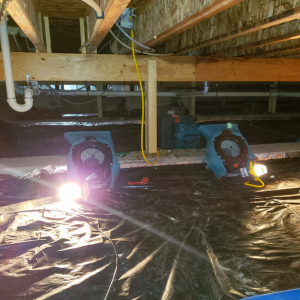
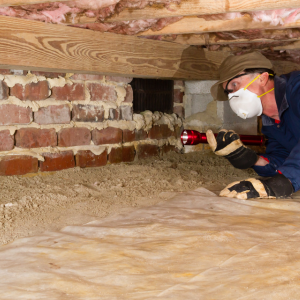
Full encapsulation means a heavy sealed vapor barrier across the floor and up the walls, closed foundation vents, and usually a dedicated dehumidifier. That dehumidifier holds humidity in the range the EPA recommends for indoor air, below 60 percent and ideally between 30 and 50.

Don’t pay for mold remediation before the water source is fixed. It’ll come back within a season, and you’ll have bought the same job twice.

Partial measures deserve a mention, because in my experience buying houses they’re often the smart play. Lay a fresh vapor barrier over bare dirt. Get the sump pump working and haul off the debris. Those three things change how a house shows, with no five-figure invoice. Rotted joists and sagging beams sit in a different category. Sistering framing runs into real money. Get it priced by a contractor who’s been under the house, not off a website.

Should you fix it at all? If you don’t have the cash on hand, borrowing against a house you’re selling to fund repairs is a gamble I’d think hard about. Plenty of Shelby County sellers decide it isn’t worth it and sell their house fast in Bartlett, TN with the water still under it. Owners who want to sell a house fast in Collierville, TN reach the same conclusion once they price the repair.

How Do You Build Buyer Confidence Despite Crawl Space Water Issues?

Selling a Property with Water Issues in the Crawl Space TennesseeBuyers judge a crawl space by how it smells at the front door, not by what’s in the report. Run a dehumidifier for two weeks before showings start, and haul out the debris and old insulation. That’s the cheapest confidence-builder on the list.

Put together a binder with everything you’ve got. Inspection report, contractor estimates with company names, before and after photos, receipts, warranty paperwork. Sellers who hand over a complete file tend to hold their price better than sellers who hand over a vague sentence on a disclosure form. Information shrinks the cushion buyers build into their offers.

Pricing honestly does more for you than any repair. A house listed above market value with a known defect attracts lowballs. The same house at a realistic number attracts serious buyers who’ve already run the math.

Consider a repair credit instead of the repair itself. Buyers like choosing their own contractor, and a credit at closing moves faster than scheduling a crew in the middle of a 30-day escrow.

An heir in Germantown had covered two mortgage payments for close to a year on a house she couldn’t list. She’d never once mentioned it to her siblings. We walked it on a Saturday morning, past the wheelchair ramp her dad built onto the back steps. The crawl space had four inches of water and a pump that hadn’t been plugged in since he got sick. She wasn’t dragging her feet out of grief so much as not knowing where to start.

That’s the case where a direct sale earns its keep. Selling to investor home buyers in Memphis trades some top-line price for certainty. No financing contingency, no repair negotiation, and a closing date you pick. Plenty of Tennessee sellers working with Your Town Buyers choose that route because the carrying costs were quietly eating the difference anyway.

Frequently Asked Questions

How Common Is Water in a Crawl Space in Tennessee?

Far more common than sellers fear. Vented crawl spaces over bare soil are standard construction across most of the state, and Tennessee clay wicks ground moisture upward year-round. Add a clogged gutter, or a July afternoon of humid air hitting cool ductwork. You get dampness in a huge share of homes built this way. Finding water down there doesn’t mean your house is defective. It means nobody’s been under it lately.

How Much Does It Cost to Fix Water in a Crawl Space?

It depends entirely on the source, which is why the Tennessee ranges quoted earlier are so wide. Regrading dirt away from the foundation and cleaning gutters can run a few hundred dollars and solve the whole thing. A sump pump with a basin and discharge line lands in the low thousands. Full encapsulation with a vapor barrier, sealed vents, and a dehumidifier climbs into five figures on a big footprint. Structural repair to joists or piers sits on top of that. Get the diagnosis first. The fix follows the cause, and the cause is usually cheaper than the worst-case number in your head.

Do I Have to Disclose Standing Water to Buyers in Tennessee?

If you know about it, yes, unless your sale is exempt. Tennessee asks you to answer the disclosure form in good faith about known material defects, and water intrusion qualifies. The practical argument is stronger than the legal one anyway. An inspector will find it, and a buyer who feels something was hidden pushes harder than one who was told upfront. Write it plainly, attach what you know, and move on.

Will a Buyer’s Lender Refuse the Loan?

Sometimes. FHA and VA appraisers are told to look at the crawl space. They report standing water, dampness, and visible structural damage, and the lender can require repairs before funding. Conventional loans are looser but not immune, especially if the appraiser flags it. This is the quiet reason a wet crawl space stops financed buyers cold. They still want the house. The bank just won’t send the money until someone fixes it. Cash buyers and investors sidestep that entirely, which is part of what you’re paying for on price.

Can I Just Sell the House As-is in Tennessee?

You can, and plenty of people do. As-is means you’re not making repairs. It does not mean you skip disclosure. Expect a smaller buyer pool, more investor interest, and offers that price in both the repair and the uncertainty. That trade makes sense when the repair is large, the timeline is short, or the house is one of two you’re paying for. It makes less sense when a $600 drainage fix would have opened the property up to financed buyers.

How Long Does Encapsulation Take?

Most crews finish a typical crawl space in two to four days once they’re scheduled, longer if there’s rot to repair or debris to haul first. Scheduling is the real variable. Through a wet Tennessee spring, good contractors book out weeks, which is worth knowing before you promise a closing date you can’t control.

If you’re staring at a wet crawl space and a Tennessee house you need to sell, you don’t have to sort it out alone or decide anything today. Get the inspection and read the number. If the repair path doesn’t fit your timeline or your budget, reach out to Your Town Buyers. We’ll talk through what a direct sale would look like for you. No pressure, no obligation, just a straight answer on which option costs you the least.

Get Your Cash Offer And Sell Your House Without An Agent Today

Fill out the quick form below or call us at (901) 675-8005 to get an offer on your house TODAY!

"*" indicates required fields

This field is for validation purposes and should be left unchanged.
Property Address*
Scroll to Top